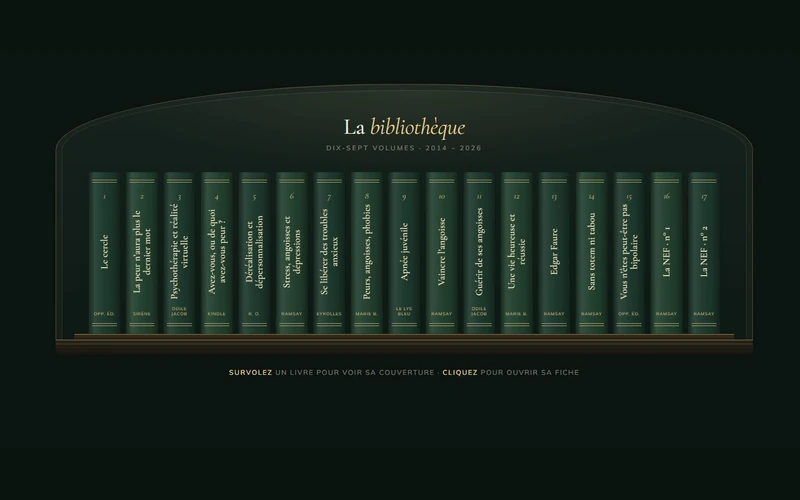
Oppenheimer · author's website
An author's website to explore like a library.
Read the case studyCase study · Website design
For Ava Films, we created a website dedicated to “Edgar Faure, l’enragé du bien public”, directed by Bernard Favre and produced by Rodolphe Oppenheimer. Archival photographs, chapters and an introduction to the director form a journey leading to enquiries about press, distribution and screenings.
The starting point
Ava Films had a domain name, a logo and introductory text for the documentary. These needed to become a public website presenting the film, its director and its production. We created that web presence and adapted the supplied content for on-screen reading, preserving the historical reference to the first broadcast in 2007.
The film’s website
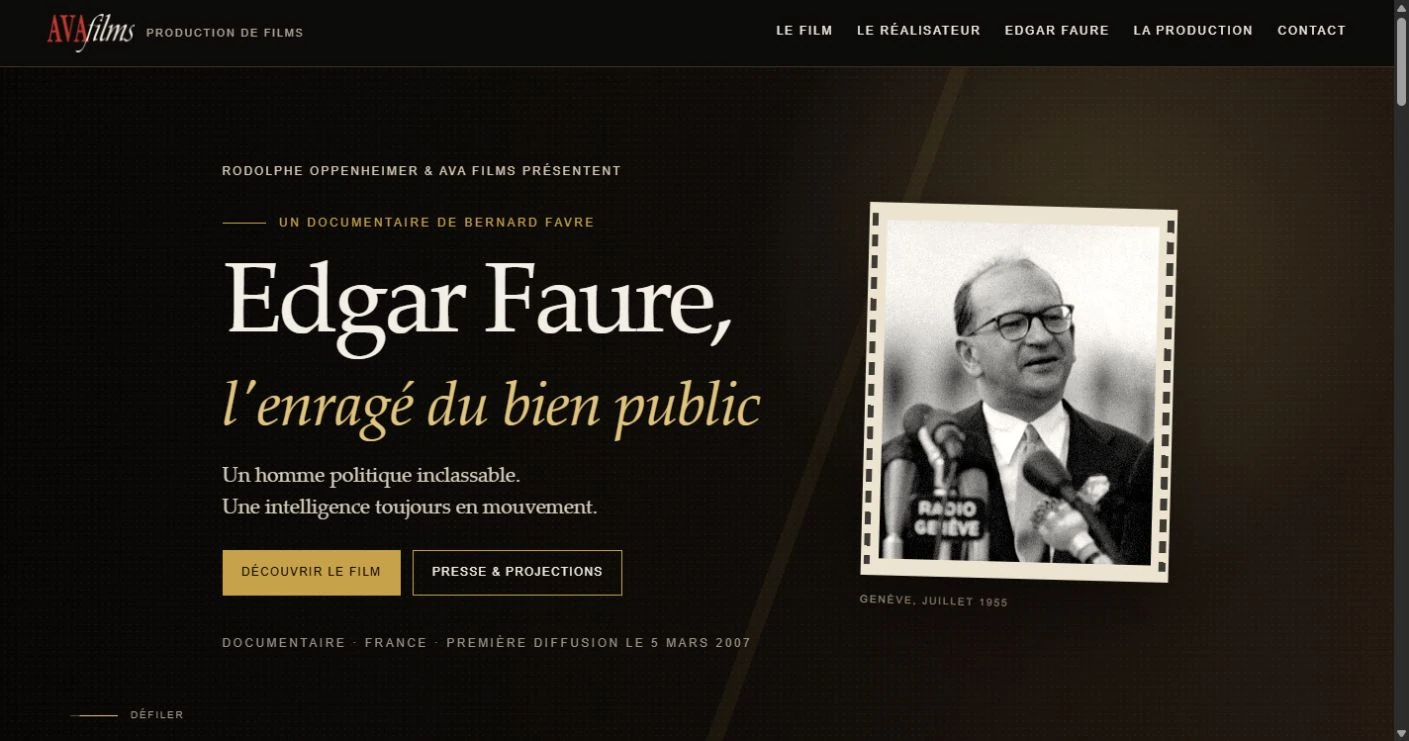
After the logo screen, the documentary title and Edgar Faure’s portrait fill the opening view. Two links let visitors choose between discovering the film and reaching the press and screenings contact.
The challenges
The introductory text needed to become a page visitors could explore freely: discover the film, learn about Bernard Favre, follow the main stages of Edgar Faure’s life and identify the production.
The site needed to evoke cinema and archives using the available materials. Historical photographs, their framing and the contrasts between dark backgrounds and paper-style sections guided the composition.
The requested opening screen centred on the logo needed to work with straightforward content access and a clear destination for press or screening enquiries.
What we did
Created a custom single-page website, from the opening screen to the contact details.
Adapted the supplied text into four chapters: the film, the director, the historical figure and the production, followed by a contact section.
Developed a visual direction combining large typography, dark and gold tones, paper-style sections and frames inspired by film stock.
Prepared the supplied logo and included three archival photographs with credits and links to sources and licences.
Created an opening screen with the logo and an access button, keeping the content at the site’s main address.
Added navigation links, film details, an introduction to Bernard Favre and a dedicated contact for press, distribution and screening enquiries.
Prepared search and sharing metadata, structured film data and the sitemap, then launched the site on ava-films.com.
How we built it
The structure stays focused on the documentary. The code organises its presentation, navigation within the page and visual effects accompanying the archives.
Menu links lead directly to each section. Four numbered chapters provide reading landmarks through to the final contact section.
The logo appears as an overlay on the page. Content access also works by keyboard; section links skip this screen and the content remains accessible without JavaScript.
The title, description, canonical address, sharing metadata and Movie structured data describe the documentary. The film’s date is kept separate from the website’s creation date.
For visitors
The title, director’s name, production and first broadcast date appear together near Edgar Faure’s portrait.
Photographs punctuate the sections. The footer brings together credits, Wikimedia Commons links and the licence for the 1966 photographs.
The “Press, distribution, screenings” section explains the purpose of the contact before displaying the email address.
Who visits, and why
Discover the film’s subject, its director and the historical figure at its centre.
Find introductory information and reach the contact for distribution, archive or screening enquiries.
Have a public address to share when presenting the film and bringing its useful information together.
The delivered result
These results describe the website and its visible functions. No measurements of traffic, enquiries or film distribution are attributed to this project.
Ava Films has a website bringing the documentary, its director and its production together in one journey.
The 1955 portrait and 1966 photographs accompany the story. The first broadcast date and photograph credits are visible on the page.
The “Press & screenings” button and navigation lead to the section explaining which enquiries it covers and showing the contact address.
Explore further
An author's website to explore like a library.
Read the case study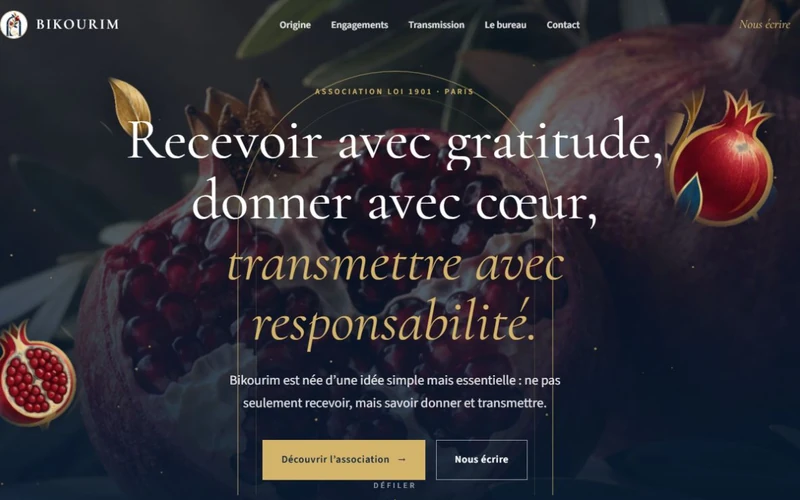
An association's website brought to life from its logo.
Read the case study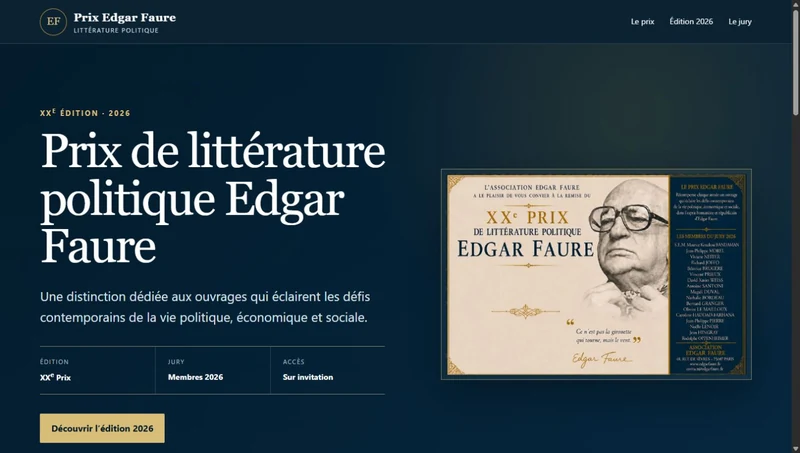
A website for the Prix Edgar Faure, following its 2026 edition.
Read the case studyOur services