Bikourim
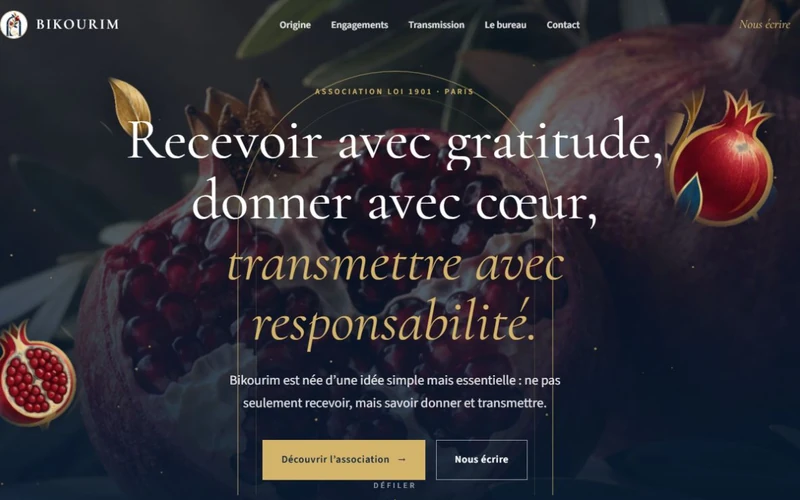
An association's website brought to life from its logo.
Read the case studyCase study · Redesign
We redesigned oppenheimer.fr around an interactive library: books move out from the shelf, reveal their covers and link to their pages. The new website brings together Rodolphe Oppenheimer’s books, family library, music and press coverage.

The starting point
Rodolphe Oppenheimer wanted a more personal presentation of his books. His starting idea was specific: arrange them in a library. The existing website already brought together books, photographs, music and press; the redesign needed to give each of these a place while making books the main entry point.
The author’s website
The alcove and bindings open the visit. Book selections, the portrait and sections devoted to family and creative work extend this literary introduction.
The challenges
Turn an author’s idea into a usable interface: readable spines, revealing covers and clear access to each book’s information.
Bring together bibliography, family heritage, music, encounters and press, with distinct sections and connections between them.
Retain useful covers, text and media, then connect old addresses to the website’s new structure.
What we did
Explored several design proposals, then composed the selected version around an alcove, green bindings and gold details.
Developed the library using CSS 3D and JavaScript: covers appear on hover, a panel opens on click and links lead to each book’s page.
Created a catalogue and dedicated book pages with summaries, covers, publication details and external ordering links.
Reused family, music, gallery and press sections, with access to telephone, email and appointment booking.
Launched the new website at the main address, with redirects from old pages, metadata and sitemap.
This case study covers the redesign published in September 2026. Technical support continues separately; later fixes and changes are not presented as redesign results.
How we built it
The animation supports book discovery. Each book also has a dedicated address accessible from the catalogue and library.
Static HTML, CSS and JavaScript pages with a perspective library and interactions adapted for clicks and hovering.
Book information and other sections are grouped in content files used to generate pages and links.
The redesign includes connections from old URLs, page-specific titles and descriptions, structured book data and a sitemap.
For visitors
Aligned bindings display the titles. A book’s panel shows its cover, edition and links to its page and ordering.
The Le Cercle page brings together the summary, publication date, publisher and cover, then offers access to other books.
Books, family, music, galleries and press have their own entry points. The website also connects to Rodolphe Oppenheimer’s consultation practice and other activities.
Who visits, and why
Find a title on the shelf or in the catalogue, read its introduction and visit an ordering website.
Discover the author’s background, explore galleries and press coverage, then find contact details.
Access the psychotherapy website or appointment booking link in the navigation.
What the redesign delivers
These items describe the website and its visible functions. They do not measure book sales, traffic or appointment numbers.
The requested library appears in the published website, with bindings, covers and book-specific interaction.
The library supports visual exploration; the catalogue and book pages provide detailed information.
Writing, family, music and press find their place within one graphic identity, with dedicated pages.
Explore further
An association's website brought to life from its logo.
Read the case study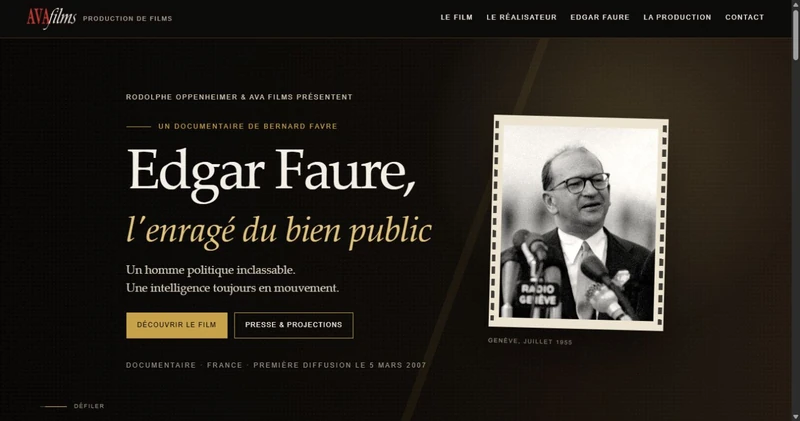
A film website that tells a story.
Read the case study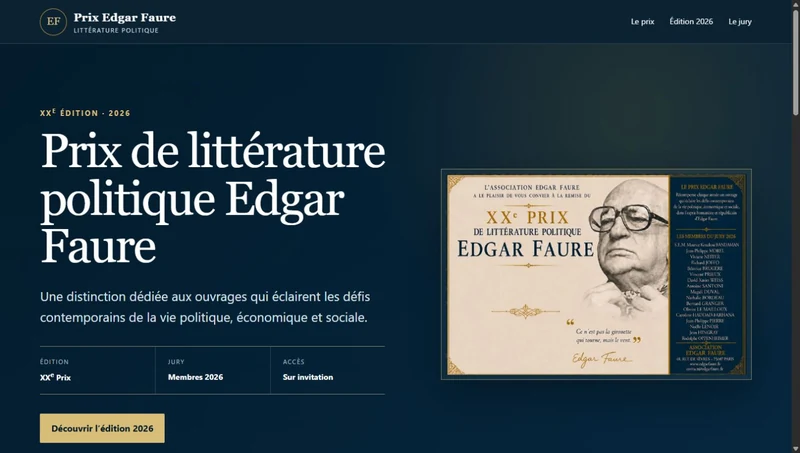
A website for the Prix Edgar Faure, following its 2026 edition.
Read the case studyOur services